Road freight
FTL, LTL, express and pallet freight: understanding the difference
The four road freight service types are not four price points for the same journey. They are different arrangements of the vehicle, and that is what decides which one fits.
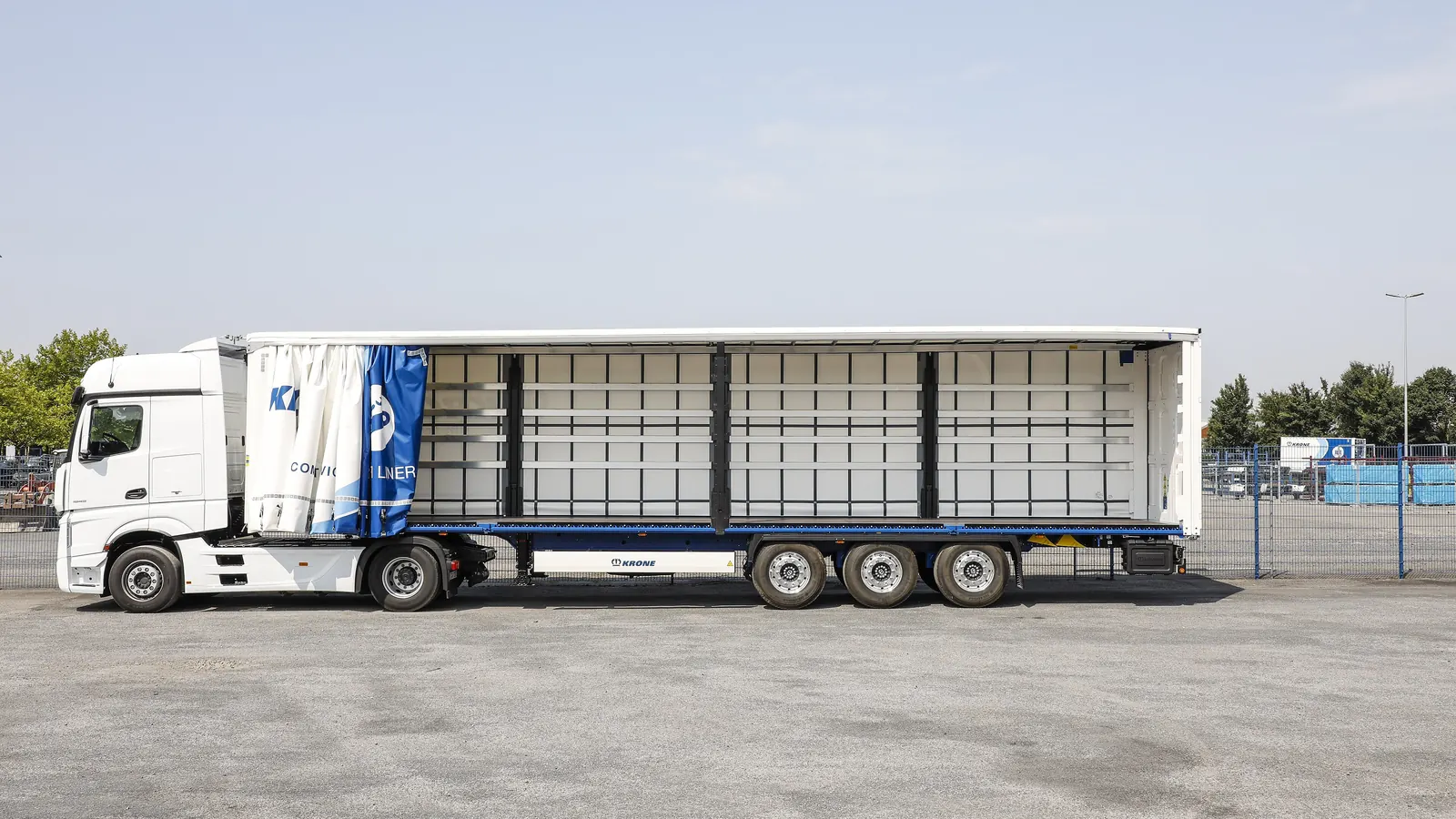
The four service types a European road freight forwarder will offer — full truckload, part load, express and pallet freight — are usually presented as a price ladder. Cheapest to most expensive, slowest to fastest, pick according to budget.
That framing produces bad decisions, because the four options are not the same journey at four prices. They are different answers to one question: who else is on the vehicle, and how many times will the cargo be handled? Almost everything that follows — cost, speed, predictability, packaging requirements, damage exposure — falls out of that.
Full truckload
In a full truckload movement, the vehicle carries one consignment. It is loaded, it travels, it is unloaded.
The defining property is not size. It is exclusivity: the cargo is handled at origin and at destination and generally not in between, and the route serves one shipment rather than being built around several.
That has consequences beyond the obvious. Transit is typically more predictable, because the schedule is not contingent on other consignments being ready. Handling-related damage exposure is lower, because handling is what causes it. And the cargo does not need to survive being stacked against an unknown neighbour.
FTL is not only for shippers who fill a trailer. A part-filled truckload is a real option when the cargo is fragile, awkward, time-critical or unsuitable for consolidation — the shipper is buying the exclusivity, not the cubic metres.
Part load
Part load — LTL, "less than truckload" — puts several consignments from different shippers on one vehicle.
The consignment is collected, taken to a facility, consolidated with others, moved, and separated again before delivery. It may pass through more than one facility depending on the network and the lane.
Sharing the vehicle shares its cost, which is the appeal. The trade-offs come from the same fact:
- the cargo is handled several times rather than twice, so packaging has to be built for handling and not just for the road;
- the schedule depends on the network's departures, not solely on when the goods are ready;
- transit is generally longer than the direct distance implies, because the route is a network path.
Part load suits stackable, well-packaged, reasonably robust goods on a schedule with some tolerance. It suits fragile, unstackable or tightly time-bound cargo much less well, and this is where the price-ladder framing does most of its damage: a shipper choosing LTL purely on cost may be putting cargo into a service whose handling profile it was never packaged for.
Express freight
Express is a direct, time-critical movement — often a dedicated vehicle taking the shortest viable path, sometimes with crewing arranged so that the vehicle spends less time stationary.
What is being purchased is elapsed time and the certainty of it. The cost reflects that the vehicle's schedule is built around one consignment, and that whatever it would otherwise have carried, it is not carrying.
Express is worth its cost when the consequence of being late is disproportionate to the freight cost — a production line waiting on a component, a replacement part for stopped equipment, a delivery window that cannot be re-booked. It is poor value for cargo that is merely wanted sooner.
Pallet freight
Pallet freight is a form of part load organised around a standard unit: goods are palletised, and the consignment is priced and moved as a number of pallets of a given footprint and height.
The standardisation is the point. Handling equipment, network capacity, pricing and space allocation can all be arranged around a predictable unit, which is what makes small consignments economic to move at all.
It follows that the requirements are stricter than for general part load. The load must genuinely be a pallet: within footprint, within height, stable, secured, and able to be lifted and stacked. A pallet that overhangs, leans or cannot take weight on top stops being a standard unit and becomes an exception the network has to work around — which is where surcharges and delays come from.
Comparing them
| Vehicle shared | Handling points | Schedule driven by | |
|---|---|---|---|
| Full truckload | No | Origin and destination | The shipment |
| Part load | Yes | Origin, one or more facilities, destination | The network |
| Express | No | Origin and destination | The deadline |
| Pallet freight | Yes | Origin, one or more facilities, destination | The network |
The table describes the general shape of each service. Specific arrangements vary between carriers, lanes and networks.
The questions that actually decide it
Rather than starting from budget, the useful sequence is:
- Can the cargo share a vehicle? Contamination risk, security, fragility, temperature and regulatory constraints can settle this before cost is considered.
- Can it survive repeated handling? If it needs specialist equipment or cannot be stacked, consolidation costs more than it saves.
- How firm is the delivery date? A hard consequence for lateness points towards a dedicated vehicle; genuine tolerance opens up consolidated options.
- Is the cargo a standard unit? Properly palletised goods have options that loose or irregular items do not.
- How much space does it really need? Answer this by dimensions and weight, not by an estimate — the estimate is where quotes and reality diverge.
Scale, in other words, is the last question rather than the first.
What this article does not do
No prices, rates, transit times or availability appear here. They vary by lane, season, equipment and carrier, and a number in an article would be quoted back long after it stopped being true.
On the LogisticID website
Have a shipment that needs arranging? Send the route, cargo and dates.